Metabolic Efficiency: Who Needs it?

tri 3 at once

As a sports dietitian, as well as an endurance athlete
(triathlon and marathons) that struggles to lose weight, I often find myself
frustrated with the low response my body has to my consistent training and very
disciplined eating habits. I also have many athletic clients that struggle with
the same dynamic. I thus began to research the concept of “Metabolic Efficiency”,
defined as “Energy intake based on body weight that is required to maintain
current weight.”  I even went as far as
having a basal metabolic rate test done, only to discover mine was off the charts
(low).  This demonstrated to me that just
to maintain my current body weight (without gaining), or to drop even a minimal
amount, required less energy (calories) than my already restrictive daily
intake even with an above average of training hours per week. So what then is metabolic
efficiency and does it exist? Am I that efficient as a machine – that I do not
need much fuel, even with a high demand of training hours. Maybe I am the new
model of “green,” the “Prius” of the athlete model. Yes, metabolic efficiency
seems to have a positive ring to it, but it can be an especially frustrating
state for those that seek weight loss as a benefit of endurance training.

This is not a new concept. In fact, in the early 80s,
researchers highlighted the potential for energy efficiency among athletes when
many competitive athletes reported what would seem to be inadequate energy
consumption to meet the demands of their excessive training regimens.  (Drinkwater, Deutser, Dahlstrom, Beidelmann).  Based on the energy balance equation (energy
consumed equals energy expended), one would expect these athletes not only to
jeopardize their performance with such low intakes, but to drop weight
drastically. However, evidence showed that triathletes, gymnasts, marathoners
and distance swimmers maintained their body mass over extended periods despite
low energy intakes (less than 35 calories per kilogram of body weight). Thompson
et al, studied 24 endurance athletes with the same number of hours of training
in a week.  Some of the athletes
typically ate less than adequate energy and others had above adequate energy
for their training demands (there was a difference of almost 1500 calorie per
day intake between the two groups). Thompson’s results definitely leaned
towards metabolic efficiency existing, because regardless of the difference in
energy intake, both groups’ body composition (body fat and muscle percentages)
remained stable for over two years.

One could easily argue that what athletes reported as
intake, may be under-reported. This in fact, is a common phenomenon, particularly
in athletes of aesthetic sports, where body image distortion runs rampant.
Wilmore and Schultz measured energy expenditure in female runners in a
respiratory chamber. Their experimental group reported significantly lower
energy intakes than their training would require but the measured energy
expenditure showed no evidence of metabolic efficiency. In these studies,
metabolic efficiency has a more objective, physiological definition: a lowered
resting metabolic rate and an increased energy expenditure during intense
activity. In similar studies, Beidelmann in 1995, like Wilmore and Schulz, found
no significant changes in resting metabolic rate or energy expenditure (rate of
oxygen consumption). With this definition secured, the only conclusion these
researchers could draw, was that the runners were under reporting energy intake.

Thompson et al, argued for metabolic efficiency again in his
1995 research. Here he set out to determine if activity energy expenditure,
sleep energy expenditure and resting heart rate in endurance athletes were
similar over a 24 hour period rather than an extended time, and also measured
oxygen consumption in a respiratory chamber.
Surprisingly, lower energy-intake athletes (low again by almost 1500
calories of estimated energy requirements for the experimental activity) had
physical energy expenditure, resting metabolic rate, and sleep energy
expenditure lower than the adequate-intake athletes. Furthermore, he controlled
the athletes’ intake, thereby preventing over or under reporting in this short
duration.

My initial perception of metabolic efficiency (very slow
metabolism) was now totally upended by this research.  Perhaps I underreported my food intake oroverstated my levels of activity.  The research found that many physically active people are more sedentary in the non-exercising portions of their day which would negate the perception of less energy intake would lead to a drop in body mass. To take this even further,
athletes (particularly ones that are highly competitive, or involved in high
intensity endurance sports) typically have an extended recovery season when
their much training regimen decreases, as compared to their short (probably 2
or 3 months at the most) peak season.

In most of these studies, resting metabolic rate, energy
expenditure during exercise, and an average of daily energy expenditure
provided the measure of metabolic efficiency. These measurements of metabolic
efficiency can be helpful for many, especially athletes in aesthetic sports who
can justify eating less yet still perform effectively. For endurance athletes,
it may take longer for them to “hit the wall” as they burn less calories and
spare more glycogen during their events. However, for many recreational
athletes, often choosing to participate in a sport for the benefit of being
able to eat more and still lose weight, metabolic efficiency may result in
frustration unless they have a deeper understanding of the concept. Based on
experience with my recreational athlete clients, many often think that training
will allows them to eat more. The research above helped carve out a good
summary for these athletes: unless metabolism is raised simultaneous with
training, weight gain is more likely to result versus weight loss.

A higher metabolism means a higher consumption of oxygen,
the rate at which the body burns calories. This includes at rest and during
exercise. Duration, intensity of workouts, as well as body composition and food
consumption, not only determine calories burned during workouts, but also
calories that continue to burn post work outs. Exercise itself is the highest
contributor to increasing ones metabolism and those of us wanting to reverse
our efficient metabolisms may need to take a closer look at how we work out.
Our diet does contribute to overall metabolism (calories burned based on
composition of macronutrients/ the thermic effect of food) but to a lesser
extent than exercise.  Whether it is a
high intensity aerobic workout or a lower intensity longer duration work out,
or even a muscle building weight lifting session in the gym, all of these
contribute in some way to raising one’s metabolism. Our metabolic rate also
affects the rate at which we burn calories at rest, a concept referred to as
“excess post exercise oxygen consumption” or EPOC.  So am I really metabolically efficient, or do
I need to look at the big picture: measured Oxygen consumption, an exercise
routine that maximizes EPOC, journaling and calculating energy intake versus
energy expenditure instead of estimating it?

bike

References:

  1. Beidem BA, et al. Energy balance in female distance runners. Am J Clinical
    Nutrition. 1995;61:303-11.
  2. Dahlstrom M, et al. Discrepancy between estimated energy intake and requirements in
    female dancers. Clin Physiol 1990; 10: 11-25.
  3. Duester PA, et al. Nutritional intakes and status of highly trained women runners.
    Fertil Steril 1986; 46: 636-43.
  4. Drinkwater  BL, et al. Bone mineral content of athletes. N Engl J med 1984;311:277-81.
  5. Fitzgerald, Matt. Running Hot. The facts and fallacies elevating resting metabolism.
    2009. www.poweringmuscles.com.
  6. Schulz  LO, et al. Energy expenditure of elite runners measured by respiratory
    chamber. J Appl Physiol 1992;72:23-8.
  7. Thompson JL, et al. Resting metabolic rate and thermic effect of meal in low and
    adequate energy intake in endurance athletes. Intl J Sports Nutr
    1993;3:194-206.
  8. Thompson JL, et al. Daily energy expenditure in male endurance athletes with
    differing energy intakes. Med Sci Sports Exerc 1995;27:347-54.
  9. Wilmore JH, et al.Is there energy conservation in distance runners? J Appl Physiol
    1992;72:15-22.

run


Portion Size Quiz

1. A typical bagel is nutritionally equal to four slices of bread.

a. True
b. False

2. Your waiter delivers your entrée with broccoli on the side, as you requested. You know it’s an appropriate portion because it’s the size of:

a. A mango
b. A can of soup
c. A tight fist.
d. Your palm

3. When you shop for fish, you estimate how much to purchase by assuming that each person needs a portion the size of:

a. A compact disc.
b. An ice cube.
c. Your palm.

4. At a buffet, you dish yourself up some rice, making sure it’s about the size of:

a. softball
b. A tennis ball
c. A golf ball
d. A marble

5. The place where you usually have brunch uses just the right amount of batter for its pancakes; you can tell, because each one is the perfect amount for a single serving of grains, which is the size of:

a. A Frisbee
b. A makeup compact
c. A silver dollar
d. A compact disc.

6. One serving of orange juice is equal to 16 ounces.

a. True
b. False

7. At a cocktail party, you make a beeline for the cheese platter. You allow yourself just a couple of servings, and each one is the size of:

a. A sugar cube.
b. A 9-volt battery
c. A business card.

1. A typical bagel is nutritionally equal to four slices of bread. a. True

Bagels continue to grow in size — they now typically range anywhere from four to six ounces, depending on the bagel shop, and register approximately four servings a pop! Since it is recommended that you stick to six to nine servings of breads and grains per day (unless you’re very active; then you can have up to 11), eat 1 bagel for breakfast and you’ve already consumed roughly half your quota — before noon! Next time you crave a bagel, try eating just half of one and saving the rest for later or even the next day. And opt for whole-grain!

2. Your waiter delivers your entrée with broccoli on the side, as you requested. You know it’s an appropriate portion because it’s the size of: c. A tight fist.

While vegetables (if prepared healthfully) are indeed great for you, it’s good to know exactly what a serving size is so you don’t overload on calories. One woman’s tight fist is equivalent to approximately ½ cup, the standard serving for cooked vegetables as well as cut fruit, pasta and rice. No matter where you go, you can gauge your serving size by using your fist!

3. When you shop for fish, you estimate how much to purchase by assuming that each person needs a portion the size of: c. Your palm.

Your body needs only two to three servings of meat per day, but given the average portion sizes, many of us eat that much at every single meal! Each serving is two to three ounces, which just about fits in the palm of a woman’s hand. When eating meat, be sure to opt for leaner choices, such as fish, white-meat turkey, chicken breast and pork tenderloin. The equivalent vegetarian single serving would be one cup of beans, approximately two fists’ worth.

4. At a buffet, you dish yourself up some rice, making sure it’s about the size of: b. A tennis ball.

It’s very easy to get portion distortion at a buffet with industrial-size serving utensils, gigantic plates and buckets of food. If you’re not careful, you could wind up eating several times the recommended amount for one person! Carbs such as rice can be especially difficult to judge, since they’re not served in a single chunk. Envisioning the size of a tennis ball is a helpful guideline.

5. The place where you usually have brunch uses just the right amount of batter for its pancakes; you can tell, because each one is the perfect amount for a single serving of grains, which is the size of: d. A compact disc.

CD-sized pancake is equivalent to one bread serving, but when was the last time you were served a portion that size? If your pancakes are significantly bigger, it’s possible that you’re getting all your bread servings for the day in one meal. Reduce your portion of flapjacks by splitting your dish with a friend or just not cleaning your plate.

6. One serving of orange juice is equal to 8 ounces. b. False

One serving of juice is equal to ¾ cup, or 6 ounces, which is about the size of a wine glass or a Styrofoam coffee cup. Given all the sugar in most juices, downing a supersize glass of the stuff can leave you taking in up to 400 calories — and that’s in addition to whatever you’re eating.

7. At a cocktail party, you make a beeline for the cheese platter. You allow yourself just a couple of servings, and each one is the size of: b. A 9-volt battery.

One serving of natural (not processed) cheese is 1½ ounces. Even though you have to watch out for the high fat and cholesterol content of many cheeses, it’s still important to get two to three daily servings of dairy in order to meet your calcium needs. If dairy is not your thing, try to eat at least three other calcium-rich foods, including calcium-fortified orange juice and cereal, tofu, and fish with bones, such as salmon or sardines.

Beat the Heat with a Watermelon Treat

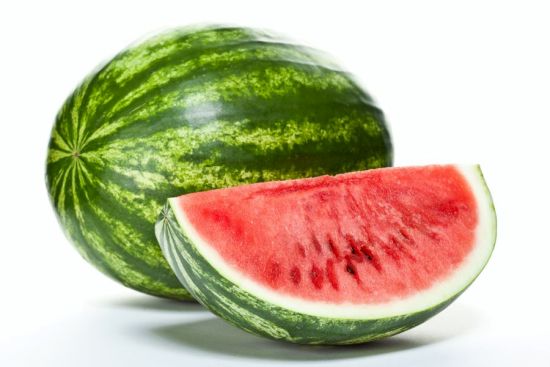
Watermelon – not just for seed spitting.

Not only is watermelon is a favorite summer food selection and barbeque closer, it is equally beneficial to health. The antioxidant lycopene is a chemical found in plants that gives certain foods (watermelon, tomatoes, red grapefruit, and guava) their red color.

Part of the large class of plant compounds called carotenoids, which help protect and preserve body cells from oxidation and damage, lycopene may reduce one’s risk of various cancers, particularly prostate cancer. Watermelon is also a good source of antioxidants, that work towards preventing heart disease, lowering cholesterol.

CHOOSING THE PERFECT WATERMELON

watermelon2

Choose a firm, symmetrical fruit that is free of bruises, cuts, and dents. Pick up the melon, it should feel heavy. (A good watermelon is 92% water.) The underside should have a creamy yellow spot where the melon sat on the ground and ripened in the sun.

Watermelon-Strawberry Smoothie

(16 oz serving)

  • 1 cup seeded watermelon, diced
  • ¾ cup lemon sorbet or sherbet
  • 8 frozen whole strawberries
  • 1 tablespoon lemon juice
  • 4 cubes of ice
  • 1 cup water

Place all ingredients in a blender. Blend until smooth.
(cals; 224, carbs: 50g carbs, 4g fiber (net carbs = 46g (mostly natural sugar: fructose), 2g pro, 0 g fat.

Watermelon Sorbet

1 seedless watermelon (peeled and cubed)

1. Arrange the watermelon cubes in an even layer on a baking sheet and freeze until the watermelon is solid, about 2 hours.

2. In a blender, puree watermelon cubes until smooth

3.  Put the puree in loaf pans or dish, packing it down as you add more on top.

4. Freeze until the sorbet is scoopable, 1 to 2 hours more.

5. To serve, scoop the sorbet into dishes and eat immediately.

watermelon sorbet

Watermelon Parfait

(2 servings)

  • ½ cup low fat granola
  • 1 cup seedless watermelon, cut into small chunks
  • 2 cups of low fat vanilla yogurt
  • 1 sliced banana, sliced
  • ¼ cup of Almond slivers

In 2 tall glasses layer ½ of each of the granola, watermelon, yogurt and banana
Repeat layers with the other half of the ingredients.
Garnish with slivered almonds.
(cals per serve: 230 cals, 4g fat, 9g pro, 35g carbs, 5 g fiber)

watermelon kids

M.O.D – meal plan of the day!! CHALLENGE!!

Green monster shake  recovery after a morning work out  (made with vanilla protein powder, 1 c spinach, 1/2 banana, 1/2 c pineapple, and ice and water)

mid morn – greek yogurt,

lunch: grilled chicken on big salad (lots of veggies, oil and vinegar),

2 hs after lunch: 13 Mary’s gone crackers and 2 Tbsp hummus.

mid aft2:  apple and 14 almonds

Dinner: stir fry veggies and egg whites, serve over 1/2C  cooked quinoa.

Ways to use Whey

Whey protein is typically known amongst the work out crowds as a lean muscle recovery protein. It works hand in hand with the breakdown of muscle during the work out to rebuild and repair those muscle fibers. However, whey also has its place in a regular healthy diet for similar reasons: it can be a nutritional and complete source of all amino acids, and not necessarily only for athletes.

The most common use for whey is making protein shakes/smoothies however whey can also be incorporated in any overall health plan as quite the versatile ingredient in many simple and fun recipes. In all of these options, it offers a high quality dairy protein boost.

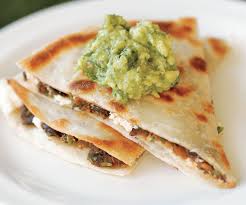
Here is one favourite created by Chris Mohv, owner of Mohv Results, Inc. This interesting way of using whey not only adds variety and interest to a meal, but it also offers 22 grams of protein and 10 grams of fiber.

VEGETABLE QUESADILLA WITH PROTEIN GUACAMOLE
protein guac

Ingredients:
Quesadilla
– 3 snack bites of Cabot Light Cheese (50% less fat) or 2.25 oz shredded cheese
– 1 sprouted whole grain tortilla
– ¼ onion, grilled
– 3 slices of fresh tomato

Guacamole
– 1 avocado
– ¼ cup whey protein isolate, unflavored (about 1 scoop)
– 1-2 tbsp chopped fresh cilantro
– Juice of ½ lime
– Pinch of salt

Makes 2 servings

Quesadilla:

  1. Place the cheese on the whole grain tortilla.
  2. Spray a small pan with nonstick cooking spray and warm over medium heat.  Add the tortilla to the pan, cheese side up.
  3. When the cheese is melted, top with grilled onions and fresh tomato.  Fold the tortilla in half and remove from the pan.  Cut in half.
 Guacamole:
  1. Slice the avocado in half and remove the pit.  Scoop out the avocado and place in a medium bowl.  Mash until smooth.
  2. Add whey protein isolate, cilantro, and lime juice.  Combine until smooth.  Flavor to taste with salt.
  3. Scoop half of the guacamole onto each quesadilla slice.  Serve immediately.
Variation:
Substitute grilled onions and tomato with your favorite vegetables.
Ingredient substitutions will change the nutrition information.

Nutrition information for 1 serving (½ of the quesadilla topped with ½ of the guacamole): 368 calories, 22 g protein (including 8 g of whey protein), 26 g carbohydrate, 10 g fiber, 22 g fat, 6 g saturated fat, 291 mg sodium
Also contains: vitamin A, vitamin B6, vitamin C, folate, vitamin K, calcium, copper, potassium

For more information and about whey, visit:

http://wheyprotein.nationaldairycouncil.org/

There are many more recipe ideas on this site too!!