Supplementation: the good, the bad and the ugly

Ilana Katz MS, RD, CSSD
nutr dens

Food is the best medicine, something I have made my followers note long before I came across a famous quote from Hippocrates for the first time:  “Let food be thy medicine, and medicine be thy food.” Therefore, I too could have had a role in the history of westernized medicine, (chuckle). Well seriously, I am constantly harping on the fact that  the ideal way to get most needed nutrients is from foods. Naturally occurring nutrients are more compatible and thus more bioavailable than their supplement counterparts. Eating a rainbow a day, keeps the doctor away… yes another ilanological saying.
bike food

Don’t get me wrong, there may be a place for supplementation in someone’s diet, and I will get to this shortly, but my point is: Nowadays, everything from bottled water to basic milk and bread seems to have souped-up levels of vitamins and minerals added. This is often a bureaucratic or political decision poured into our food source which will supposedly cover nutritional needs. And if that is not the case, then it is often a marketing ploy that banks on the gullibility of the masses, especially if their diets are less than stellar.

The burning question thus trickles to the forefront: “So is there a possibility then on overdosing on vitamins and minerals, especially when the food source may be beyond individual control?” There are a couple of pointers to highlight with this in mind: One – some people believe that if a little provides benefit, then more provides a greater benefit, especially when it is taken in pill form. Two – can our food source be killing us?

Let me start by saying, most of us, even the gullible ones, are not in danger, since it is unlikely that we are overdosing. Even if you may be consuming fortified cereal for breakfast, have a protein packed meal replacement with extra vitamins and minerals as a snack, enjoy some enriched pasta for dinner, and still taking a daily multivitamin you are safe. Yes you may very well be over the daily recommendations of various nutrients, but that will not harm you.

However there is such a thing as megadoses. This means one that is routinely taking large doses, particularly in supplemental form, believing that more is better. Routine megadosing can have its own set of consequences. Some examples include:  too much Vitamin C or zinc could cause nausea, diarrhea, and stomach cramps. Surplus vitamin A could induce nausea, blurry vision and dizziness. Too much selenium could lead to hair loss, flaking skin, gastrointestinal upset, fatigue, and even nerve damage. Too much calcium can cause kidney stones and with that megadoses of vitamin D can calcify bones. With this said, it is rather difficult to get these dangerous doses from food alone.

This leads one to ponder whether you should or should not to take daily vitamin supplements at all or even why so many people do in fact take them. A recent study was published to answer this question. Results showed that 45 percent of those taking vitamins do so because they believe they will improve their health. Other reasons were to maintain their health (33 percent), improve bone health (25 percent), and to get more energy (11 percent).


Here are some observations that may help you to make that personal choice:

  • There is general agreement that women of reproductive age should take folic acid supplements to help prevent spinal or neural tube defects. Some studies have also showed that folic acid taken during pregnancy may reduce the risk of autism in the child.
  • Taking vitamin D and calcium supplements have long been recommended for older women in order to help prevent bone fractures. However, peer reviewed research has questioned the that the benefits of already healthy women taking calcium and vitamin D are overstated. Furthermore doses not required may even be hazardous to health, increasing the risk of developing kidney stones.
  • Fifty-five to 60 percent of all women over age 60 are presently taking vitamin D and calcium.  Many of them have osteopenia or osteoporosis, but many do not.

In Summary:

Vitamins are not a medical panacea except in certain, very specific situations. For most people, when it comes to vitamins, the reasoning, taking more is better, can lead them into a host of medical problems. There is also no need to fear taking too much if these basic directions are followed. Most multivitamins have a wide margin of safety that even when you are combining them with fortified foods will not cause you to keel over.

If you are one of those that requires supplements for various reasons (eg. Diet is not stellar, certain dysfunctions or allergies, immunity needs boosting) then some pointers of note may include:

Whole food supplements such as juice plus, are more bioavailable for absorption than vitamin and mineral supplements, therefore if it is of need to supplement your food source, consider the whole foods form.

When it comes to vitamins and minerals, more is not necessarily better. In fact more not only delineates the benefits but increases harm.

Check the dosages.  Supplementation should be no more than the daily value. This information is readily available on the labels. There is no need or benefit to take more.

Uncertainty can always be confirmed with a registered dietitian or your physician. Tell them about any supplements you may be taking, including vitamins and minerals, and their doses. The professionals will ensure you keep it in the safe range.

Individuals who take megadoses of vitamins are at risk of developing various types of medical maladies. However, most people who take just one multivitamin a day are safe, the only risk for those who do not necessarily require multivitamins or are taking one of poor quality (not whole food) is expensive pee.

green

Training (outside!) in the winter

Yesterday it was, once again, raining in Atlanta.  Yesterday I ran in the rain.  Ordinarily this would not be such a momentous event.  But…. I have gotten lazy over the last couple of months.  It all started with our three Ironman races in back to back years.  That kicked my butt.  These days, even a 5 mile run was out of the question.  I am not signed up for anything in particular so have become rather blase about running.  I know you don’t believe it, but it’s true.

So this week I decided I needed to nip that fat and lazy in the bud.  I would, once again, rise early each morning and run or swim or spin.  GREAT! for the first day.  And then yesterday rain fell in Atlanta once again.

What did I do?  I had made up my mind on MONDAY when I heard the storm was coming that I would run in the rain.  I told myself Tuesday as I headed home from an early morning visit to the dog park that I would run that day.  And run I did.

When I walked out the door, I thought “this isn’t bad at all”. 50-60 yards down the road I debated going  back for a jacket.  At about the 1/2 mile mark rain started coming down hard again.  The streets were full of puddles as it had been raining since midnight.  But I pressed on.  About the 3/4 mile mark I didn’t notice the rain anymore.  I ran 5 miles, was soaking wet and never really noticed after the first 3/4 mile.

Ironically, when i got home, I found an article on Running miles through the winter, and it helped make me feel even more liberated.

A quote:

Those of us who exercise in all sorts of weather will attest that there is a certain thrill that can come from terrible conditions. “It makes us tough,”  Our runs in horrendous conditions  are “epic runs.” Right? They are truly memorable, ones we actually recall fondly.

……….

But the problem with epic runs or rides is that each one ups the ante. A day with just ordinary bad weather simply is not memorable after a while.

I still remember a run 10 years ago in the driving rain, freezing cold – one of Atlanta’s ice storm memorables.  I had been traveling for business and was thrilled to be back on Atlanta soil, even if it was cold and dreary.  And very much looking forward to running through my homely usual routes.  So much so that I didn’t notice the cold and the rain.  It was so bad that a policeman in the park asked if I wanted a ride back home.

The common thread in my experience as well as the  article s i have found on running in the winter, and that is the resolve to just do it, no matter what.  You can’t let yourself make the decision while you are peeking out the door at the rain.

Make your resolve to Run Right Through The Winter.

Do you exercise less in bad weather? Leave a comment and share your winter running strategies and your epic run stories.

DISSOLVING SUGAR CRAVINGS

One of my biggest challenges, not only with my own personal goals, but also with many clients, is to get to the bottom of the age old obscurity of sugar cravings. It’s not rocket science, right? Just don’t eat it ! Right? But oh we all know it, and live it day after day, it is just not that simple.  Why? Because the physiological response to sugar is like an addiction. Sugar temporarily elevates the levels of various neurotransmitters and endorphins. The “feel good” chemicals, serotonin and dopamine are released when sugar is metabolized, giving a sense of pleasure.  Sugar cravings therefore, are best explained as an addiction to endorphins which is a reaction similar to the high of a drug addict.

So is this addiction a serious or dangerous for that matter?  The answer is both yes and no. Our bodies do need sugar. The required fuel for the brain, is in fact glucose.  The metabolism can thus effectively metabolize what we eat and provide the energy source required thereof.  The key phrase here is “amount required.” The danger takes effect when the amount of sugar that is consumed is way more than required for the optimal source of energy. Furthermore, sugar that is refined has no nutritional value resulting in empty calories. Calorie dense yet nutrient free foods if make up most of ones diet, will lead to an array of health problems from overweight and obesity to diabetes and cardiovascular disease, just to name a few.

As noted, sugar is used an energy fuel which is needed by the brain. The down side is that it causes blood sugar to rise, and as quickly as it rises, it plummets back down, resulting in the physiological need for more sugar to get it back up, and the vicious cycle of craving sugar begins. It is like a rollercoaster set in motion, swinging from hyper to hypoglycemic reactions (a pendulum of high to low blood sugar levels). This is the body’s homeostatic response to stable blood sugar, in other words, trying to keep the body in balance. Unfortunately the physiological overcompensation is what causes our uncontollable cravings.

This does not mean to say that you should be on a low carbohydrate plan to avoid cravings, in fact, it is quite the opposite. For one thing, it has already been stated that the required fuel for the brain is carbohydrates in the form of glycogen, so avoidance of carbs is unhealthy in itself. It is it the amount of carbs that is relevant, as well as the type of carbohydrates eaten, that will reduce sugar cravings.

Trying to cut calories by reducing carbohydrates tends to increase sugar cravings.  Sugar substitutes like Splenda and sugar alcohols are use by manufacturers to enable them to market lower sugar or lower net carbs on the label seemingly offering a more attractive product for dieters. Be wary – firstly the jury is still out on the long term safety of these substitutes. And secondly, sugar alcohols have been found to actually have a negative effect on blood sugars. We are then back to square one; the pendulum swing in blood sugar in a day is what leads to the vicious cycle of cravings, trying to satisfy them with foods that trigger and result in more cravings.  In other words, sweet things make you want to eat more sweet things, and although artificial sweeteners are calorie free, they are not helping with reduction in cravings whatsoever. Furthermore, sugar alcohols have a tendency to cause gastrointestinal distress in that they induce diarrhea and flatulence.

Net carbs is also a marketing “con” so to speak. Supposedly, net carbs, a term coined by Atkins Nutritionals, is defined as the net value of carbs once fiber has been removed. According to the Food and Drug Administration, there is no such value: carbohydrates are carbohydrates, whether they are made up of refined sugar, starch or fiber, and every gram of carb has four calories.  So do not let low carbohydrates fool you in your endeavour to reduce cravings. Manufacturers have simply replaced regular carbs with sugar alcohols and sweeteners.

Craving sweets is often an indication of a deficiency in certain nutrients. Chromium, carbon, phosphorus, sulphur and tryptophan are often the culprits and eating a rainbow of color is a simple solution.  Broccoli, grapes, legumes and chicken (chromium), Fresh fruit (carbon), fish, eggs, legumes and chicken (phosphorous), cranberries, cauliflower, kale and cabbage (sulphur) and turkey, liver, lamb, sweet potato and spinach (tryptophan).

One last point on preventing the energy swing which is the main culprit of sugar cravings has to do with timing of intake. Waiting too long to eat or grazing all day (not waiting long enough to eat) has a similar effect to that hyper and hypoglycemic response mentioned earlier. It is during the steep peaks and valleys in energy that one feels lethargic and emotional. At these times the physiological response is to eat sweet things. Furthermore, we justify allowing ourselves to eat the treats and sweets that stimulate a pleasurable response, with stress and emotions (as if we deserve the pleasure). This only leads to guilt and depression. Evening out the peaks and valleys is the solution to curb those debilitating cravings.

In summary, the details thus far reflect on the amount of carbs, sources of carbs and timing of meals in combination as a solution for erasing sugar cravings. Practically worded, eat fresh fruits to satisfy a sweet tooth, get the refined sugars out of the body to aid in stable blood sugars,  avoid high sugar or processed products, like candy, soda, fruit drinks, pastries, etc., replace the “processed” products with foods that come from the earth (grains, legumes, potatoes)  and avoid artificial sweeteners. Make sure you get a rainbow of color in your daily intake. All the colors found in fruits and vegetables represent the vital vitamins and minerals that if lacking, will stimulate cravings.

Apple Crisp

Apple crisp

apple crisp

Fiber One skeptics! I DARE you to try this recipe and not love it. Okay, if you’re absolutely opposed to using F1 for baking, leave it out and double the graham cracker amount instead (each serving will then have 141 calories, 1g fat, 2.25g fiber.

Try spooning some of this stuff on top of light vanilla ice cream or yogurt…also yummy!!!

Ingredients:
3 cups peeled apple chunks (any sweet, not tart, variety)
1/2 cup Fiber One bran cereal (original)
2 sheets (8 crackers) low-fat honey graham crackers
2 tbsp. fat-free liquid egg substitute
2 tbsp. no-sugar-added applesauce
3 tbsp. Splenda No Calorie Sweetener (granulated), divided
2 tbsp. brown sugar (not packed)
1 tbsp. cornstarch
2 tsp. cinnamon, divided
1/2 tsp. vanilla extract
1/4 tsp. salt

Directions:
Preheat oven to 400 degrees.

Combine 2/3 cup of cold water with brown sugar, cornstarch, 1/2 tsp. of cinnamon, vanilla extract, salt, and 1 tbsp. of the Splenda.

Stir well.

In a medium-sized pot, combine apple chunks with this mixture.

Heat the apple mixture over medium heat, stirring occasionally.

Once liquid thickens to a syrupy consistency and begins to bubble, reduce heat to low and cover.

Allow to simmer for 5 minutes, and then transfer mixture to a medium-sized round baking dish. Set aside.

Next, break graham crackers into small pieces. Place graham pieces and Fiber One in a blender or food processor, and grind to a breadcrumb-like consistency.

Transfer crumbs to a microwave-safe dish, and add egg substitute, applesauce, 1 1/2 tsp. of cinnamon, and the remaining 2 tbsp. of Splenda. Stir well.

Microwave graham mixture for 1 minute.

Use a fork to break up the toughened mixture as much as possible, and then allow it to cool for a few minutes.

Transfer graham mixture to a food processor or blender, and pulse until crumbly and uniform.

Evenly distribute graham topping over apple mixture.

Place the dish in the oven, and bake for 10 minutes. Allow cobbler to cool slightly before serving.

MAKES 4 SERVINGS

Serving Size: 1/4th of cobbler (about 1 cup)
Calories: 126
Fat: 1g
Sodium: 236mg
Carbs: 33g
Fiber: 5.5g
Sugars: 16g
Protein: 2g


Garbage or Gourmet?


The phrase “Eat healthy” more than likely creates a visual of fruits and vegetables in most people’s minds. Even I, in my office, have a poster that recommends “Eat a Rainbow” today. The poster represents a rainbow made from food, from red beets and tomatoes, to green leafy vegetables, yellow squash, bright orange papaya and even purple eggplant. Many of us actually do eat this way, but we also tend to throw away the parts of our rainbow that could offer a greater nutritional value than the parts we actually eat.

A phytochemical is defined as a compound found in plant-based foods that may improve health. The layman explanation I like to use is the power of “superfoods.”   These compounds are often found in the cellulose fiber of the pits, seeds, stems, skin and rinds, the parts most of us dispose.

So here is why we should reconsider what to put in the pot or what to put in the disposal and you may be surprised at the new emerging flavors, over and above the increased health benefits.

These phytochemicals are actually edible. In some cases, it is just a matter of breaking down the fibrous tissue in an appropriate cooking manner. In others, it may require some creativity to put the entire garden to work. I have selected a few examples that I find interesting:

Broccoli

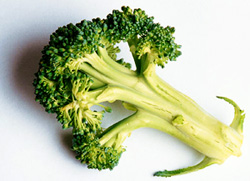
It amazes me how many people are unfamiliar with the natural state of broccoli, because it is often sold in frozen floret form. The stalk is just as edible as the florets and can be shaved with a vegetable peeler into ribbons, garnished with orange or lemon zest from the peels of citrus fruit, add strips of Parmesan and Reggiano cheese to offer a delicious gourmet salad. (Notice how I slid in the citrus peel, as it too is a good example of “dispose of or dine on”).  So what is the deal? Did you know that one broccoli stalk has almost double the daily required amount of Vitamin C? Furthermore, it has a significant amount of Fiber. Beta-carotene (pre cursor for Vitamin A,) iron, even some calcium and the phytochemicals indoles and aromatic isothiocynates. Technical food terminology that in layman’s terms, means superfoods.

With an A + on the nutritional report, these stems play a role in boosting certain enzymes that help to detoxify the body which in turn helps to prevent cancer, diabetes, heart disease, osteoporosis, and high blood pressure.

Over and above the nutrition, most health conscious people are concerned that healthy food tends to cost more. Just imagine how much more value you can get from the whole broccoli plant if you were not disposing of the stalks.

Watermelon

Have you ever tried to salt and roast your watermelon seeds? (Don’t forget to dry them out first). This may seem like a lot of work to save very little space in the garbage bin. However, other than the tons of fiber offered, one ounce of dried watermelon seeds contains about 3 grams of zinc (25 % of Daily Recommended amount), and 2 grams of iron (14 % of daily recommended amount). Be aware however, that humans cannot gain the nutritional value out of the whole seed, so unless you chew them, it will be “seeds today, seeds tomorrow.”

And then there are the rinds to consider. If you use fruit rinds in a mishmash of other otherwise disposed of vegetable pieces, like Swiss Chard stems, eggplant tops, onion skins, zucchini and carrot trimmings, celery stalks and potato skins, you can make a stock great for soup base, cooking grains in, and adding some interest to stir fried veggies.

Celery Leaves

 Celery leaves have a compound called phthalides, which has been shown to play a role in relaxing arteries, and thus may help lower blood pressure.  Celery stalks also have one of the highest sources of fiber in a plant, which therefore offers invaluable benefits to the digestive tract health which in turn aids in immunity.

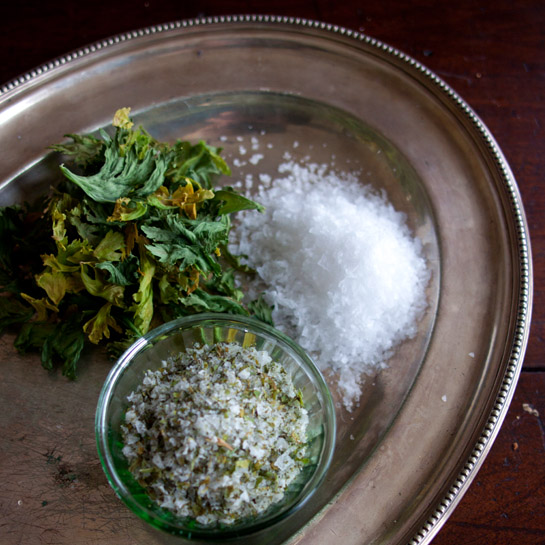
One creative way to reap these benefits is to perhaps make celery salt. It will have a strong flavour but remain light and fluffy in texture.  Place the leaves on a sheet pan. After using the oven for something else you can make use of the residual heat to dry out the leaves. This enables all the excess moisture removal without yellowing or browning the leaves. Finely crumble the dried leaves into tiny pieces. Now grind these together with sea salt and some celery seed   (about 1.5 parts sea salt to 1 part celery seed with a pinch of celery seeds). The classic use is in a Bloody Mary, but also can turn a boring tuna salad into a delicacy.

Another fine idea is to combine with finely chopped carrot and fennel leaves and mix into a homemade salsa of chopped tomato, onion and cilantro.

Papaya Seeds

Papaya fruit is known for its antioxidants. But did you know the seeds are also rich in a phytochemical called Papain. Papain is similar to a digesting enzyme which will strengthen immunity and destroy cancer cells over and above the antioxidant content.  The enzyme action destroys viruses, allergens and the coating of fungi before they can destroy human cells. Papaya seeds also contain fibrin, which reduces the risk of stroke by reducing blood clot potential.

A warning about papaya seeds is however necessary too: some seeds may have a minute amount of cyanogens (cyanide producing agent). The American Poison control centers can be contacted for updated information on any produce for warning levels.

To reduce the pungency of papaya seeds, they can be blended into a delicious drink with the papaya skin, almond milk, some ginger, and either honey or agave to add sweetness.

Onion Skins

Not only do onion skins have antioxidants, but they also are known for a flavanoid called Quercetin. A flavanoid is what gives plants their coloring, and may also offer phytochemical benefits. In this case, onion skins are protective against cardiovascular disease and various cancers. Furthermore, Quercetin is a sulphurous compound, meaning it has some form of sulphur in its chemical make-up.Sulphuritself is a pharmaceutical antioxidant. Sulphurous compounds are also characteristic of its odor, giving onion an unmistakable identity. This may be a downside to the nose, but this is outweighed by its anti-inflammatory ability. Onion skins are also rich in fructans. Fructan produces good bacteria (prebiotics) which aid in gut health. The prebiotic Inulin is a fructan, which being a polymer of fructose molecules, also offer an identifiable sweetness making it easy to use for various recipes. One creative idea is to use onion skins as an infusion (tea).

Other great nutrients worth a mention

I can go on forever, giving great examples. Worth mentioning is firstly, Swiss chard leaves because they are rich in the pleasure centers of the nervous system and simulate the neurotransmitter dopamine. They are also a good source of glutamine known for benefits in joint health. Right there, the benefits of avoiding anti-depressant medication and living a pain free lifestyle is evident.  Secondly, turnip leaves outweigh any cruciferous vegetable in their nutrient content, regardless that cruciferous variety is known for calcium and folate content.  Beet tops are richer in antioxidants, fiber, calcium and iron than the root itself.

Remember all of these, as well as melon rinds, potato peels, cob of the corn, and radish leaves, as well as the ones keynoted above, can be used to create a stock used for making great soups. Braising is a cooking method, which can break down the more fibrous material leaving you with an edible product, as well as a flavorful addition to stews and casseroles, or even poach fish in, add to a risotto, or to add flavor by cooking grains in it. Some ideas for the more fruit leaves and rinds include making rich and tart jams, or jellies, or even salad dressing type vinaigrettes by boiling them with vinegar, water, salt and stock. Mix with additions like chopped almonds and raisins and your guests will be begging you for these healthful, nutritious and delicious recipes.

Summary

The edible part of a plant-based food starts at the sprouts or root and ends at the tip of the leaves or shoots, taking the vines, tubers, and shoots along with it. So for those of you either wanting to get a whole lot more bang for your buck, especially those that tend to spend more on health foods that are grown from the earth, or for those home cooks wanting to experiment with a wider range of flavor and technique, put the entire garden to work. Not only will your dollar go further, but you will gain a nutrient benefit more than often unnecessarily lost to the garbage.


REFERENCES:

 Smith, Lombard, Peffley, Liu. Genetic Analysis of Quercetin in Onion (Allium cepa L.)‘Lady Raider.’TheTexasJournal of Agriculture and Natural Resource 16:24-28 (2003)

Harborne, J.B. 1986. Nature, distribution and function of plant flavonoids, p. 15-24.

In Cody, V., E. Middleton, Jr. and J.B. Harborne (eds.). Progress in Clinical and Biological Research, Vol.213. Alan R. Liss,New York.

Herrmann, K. 1976. Flavonols and flavones in food plants: a review. Journal of FoodTechnology 11:433-448.

Keli, S.O., M.G.L. Hertog, E.J.M. Feskens, and D. Kromhout. 1996. Dietary flavonoids,

antioxidant vitamins, and incidence of stroke. Arch Intern. Med. 154: 637-642.

Two Minutes to Dinner: a Purple Kale Kitchenworks blog. Rona Welsh. Professional chef and journalist. Accessed July, 2011.