Hi Ilana,
I had a great race on Sunday. No cramping and felt strong at the finish! I can’t thank you enough for all your help through this process!
Thank you!!!
B.B
Using Food for Optimal Energy
Hi Ilana,
Ilana Katz MS, RD, CSSD

What may feel good in the moment, may lead to chronic depression – something that we may all be dealing with in regards to our current pandemic. Stress, boredom, frustration are all emotional triggers that can lead to comfort foods. Comfort foods are more likely to be laden with fat, salt and sugar which can temporarily satisfy an emotional need, it can have longer-term effects on both physical and mental health. In short, binge-eating can create a cycle of eating and depression. Awareness, mindfulness and a good set of tools in preparedness are required to avoid this trap.
Practicing social distancing has forced many to be stuck isolated and stressed, whether it is over finances, boredom, disruption or a combination these type of feelings elicit a rise in the levels of cortisol, a stress-induced hormone. Cortisol sets off a rollercoaster of chemical reactions in the brain in relation to mood, appetite, motivation and sleep. Offsetting this imbalance in hormones, the natural instinct is to satisfy these chemicals which require highly emotionally satisfying foods (heavy carbohydrates, sweets and fats.) Simply, the pleasure centers of the brain are calling for the consistency of calmness, contentment and even euphoria but not without consequences.
Neurotransmitters, serotonin and dopamine are thus elicited to make us feel good and in the short-term this may be helpful. It is the longer term however, that can lead to chronic problems such as weight gain, blood sugar highs and lows, interrupted sleep patterns and mood swings. In short, the addictive cycle of highly satisfying foods is underway. Depression lies on the other end of the temporary satisfaction because the short-term coping behaviour makes the problem worse. Rather than dealing with the stressors the hormones and chemistry create stronger cravings and more resistance to feel-good neurotransmitters, Ultimately, resulting in needing more to achieve the same effect of satisfaction.
Understanding the mechanisms behind these cravings in response to these specific triggers can help an individual make better choice and break the cycle. Some mindful tips to avoid the binge eating/depression cycle.
In summary, our brains are wired towards feel good mechanisms which can often lead to a cycle of chemical imbalances pushing for sugary, salty and fatty foods. The more the indulgence is succumbed to, the more resistant the coping mechanisms become. Having a set of mindful tools and behaviours can break the cycle but if coping seems elusive, do not hesitate to reach out for professional help to improve longer term outcomes, especially now with the individual challenges of social distancing.
ILANA KATZ MS, RD, CSSD
Remaining hydrated is a key element to optimal performance. Even a 1-2% drop in body weight due to fluid loss can drastically affect endurance. As a sports nutritionist, I train many athletes to be aware of the importance of hydration. However, to simply have the fluid available is no good if it is not consumed. So although this topic may be a tangent to sports nutrition itself, it may offer some great tips, particularly beginners who may either struggle with balance on the bike, or with comfort on a long run. I myself crashed and broke a collar bone while attempting to drink from my water bottle and thought I would share my research in order to overcome the challenges of hydration strategizing.
Drinking on the Bike
Drinking on the bike requires a certain level of skill, especially for the beginner. Practice on a stationary trainer by removing the water bottle from the cage and drinking while looking forward. Keep in mind, that once out on the road, this motion will need to be smooth, without taking your eyes of the road. Bikers should also concentrate on working their core muscles to enhance balance and confidence. Pilates classes, abdominal strengthening, and balancing exercise are key to feeling comfortable on the bike.
A water reservoir system, such as a Camelbak offers a great alternative for staying hydrated. Although these may not be as stylish as the cycling crowd’s usual guise, they have particular advantages over traditional water bottles, particularly for athletes with balancing issues. Reservoirs hold more fluid which means less stopping for refills. They also stay colder, and can even be frozen. Cool fluid helps keep you cool as does the coldness of the pack on your back. It is even more aerodynamic. With more fluid available, more fluid is likely to be consumed, however, using something fairly heavy on your back while cycling may take some getting used to.
Other than camelbaks, cyclists and triathletes have discovered various fluid reservoirs that can be affixed to their bikes. Again, these mean less stopping to replenish fluids and more consistent hydration on long rides. Waterbottles with a straw leading directly to the athletes mouth affirmed between aerobars has recently become popular. The advantages of having fluids readily available without changing position on the bike can be great, however, many athletes complain that these water bottles have a tendency to shift on bumby roads and you would have to be comfortable enough with your balance to deal with unforeseen circumstances. Ironically, you may be trying to overcome having to balance on the bike, but stability and comfort with the aerobars themselves may be a key factor to this solution.
Regardless of the hydration method chosen, a good strategy is to set your watch alarm to sound every 15 to 20 minutes and to drink 4-6 ounces of fluid from whatever container works best for you. Practice and be comfortable before racing with anything new.
Drinking on the Run
Hydration on long runs is not as easy as on a bike, unless you are skilled at carrying a water bottle. This of course may take away from your performance and comfort. Some more convenient methods may include tying a neoprene adjustable handstrap that fits over the hand and water flask. If you are a runners typically concerned with the aerodynamics, remember that the handstraps will be moving against the wind flow and may thus have a negative effect on your aerodynamics.
A waist pack soft-shell canteen with a belt and straw may offer some convenience. This is comparable to the Camelbak reservoir mentioned above and may feel heavy for many runners. It also has a tendency to cause blisters and rashes for runs greater than a half marathon distance. Water may even taste stale after being on the road for a few hours.
A single-bottle waist pack may be an alternative, this too would save on weight and thus offer more comfort. There are many variations of this style. Some bottles are horizontal, making it easier to pull out from the sides and offer some stability to the bottle. Angled bottles are another variation and although the angle makes it easier to reach from one side, angled bottles have a tendency to fall out. Look out for extra elastic bands that are available to snug up the top of the bottle so that it does not bounce in the pouch.
The multiple-bottle waist belt seems to be the most popular for drinking on the run. This usually comes with has three 8-ounce yellow bottles, to which more can be added, as well as a small pouch that evenly disperses the weight on an elastic waistband. The bottles are light, and the wide belt does not have the same tendency to bounce. Runners may experience elbows grazing across the top of the bottles occasionally, but because the belt is soft and light, it offers more comfort and the grazing is soon forgotten. Furthermore one can put sports drink, water or a sports gel in different bottles.
Because one may experience comfort issues as well as some frustration of having to twist the belts when bottles are needed, it is important to experiment with gadgets on training runs – again, never use a new method for an actual event.
 There is much controversy in research to date of whether food can reduce mood swings or even create happiness versus dread. Basically, the science of how nutrition affects moods is based on brain chemistry: Components (elements of food) can cause changes in brain structure, chemistry, and physiology, all of which reflect behavior too. Studies have shown that there are foods that typically effect moods.
Omega 3 fatty Acids: these are considered essential fats that have to be eaten in a day to have any effect, since our bodies do not naturally make them. They are found in most fish sources as well as most plant based foods. Omega-3 polyunsaturated fatty acids may be mood stabilizers, and furthermore, play a role in mental health.
Studies have found that higher fish consumption than average showed improved brain health and lower levels if fish consumption reflected lower levels of DHA (the fatty acid found in fish) particularly in breast milk which caused more incidences of postpartum depression.
Examples of plant foods rich in omega-3s is flaxseed and chia seeds (1 tablespoon a day is considered a safe, effective dose for most people). Check with your doctor if you are pregnant or nursing, or have any other concerns. Other sources include canola oil, purslane (an herb), cauliflower, kidney beans, and broccoli.
 Fiber: Include lots of fiber, some lean protein, and good (unsaturated) fats to balance out your whole-grain carbohydrates. Small meals more often that include all these macronutrients keep energy balanced all day which dissipate mood swings too.
Never miss breakfast – including a wholesome, nutritious meal to rev up your metabolism first thin, leads to improved mood, along with better memory, more energy throughout the day, and feelings of calmness.
Selenium is a mineral used by brain according to much research. Many studies show that low selenium diets reflect poor mood control. This is related to the brain retaining selenium to a greater extent when levels are low in the body. This lead to the hypothesis that this mineral plays an important role in the brain.
Selenium-rich foods include: brazil nuts, walnuts, oysters, albacore tuna, clams, sardines, crab, most sources of fish, whole-wheat grins, sunflower seeds, brown rice, oatmeal, soy nuts, eggs, low-fat cottage cheese, tofu, pinto beans, and yogurt. Organ meat is extremely high in selenium, but also extremely high in cholesterol, so be aware and be balanced.
 Serotonin is a chemical also called the “feel-good” neurotransmitter helps with a calmness over stress. The more serotonin circulating, the better mood control has been reported. In the reverse, research, lower levels of serotonin have shown to increase aggression and anxiety.
Tryptophan. Most know this as the sleep inducing element f turkey. It is an amino acid which as enters the brain, generates serotonin (feel good chemical). Tryptophan is in almost all protein-rich foods, but the way to get more of it is not necessarily to eat these foods. Eating carbohydrates with protein help tryptophan’s chances of crossing the blood brain barrier.
Folic acid (folate). Low levels reduce serotonin in our brains. Researchers hypothesize that taking folate as a supplement and eating folate-rich foods can be the most natural anti-depressant. Folate-rich foods include spinach, green soybeans, lentils, romaine lettuce, pinto beans, black beans, navy beans, kidney beans, broccoli, asparagus, greens, orange juice, beets, papaya, brussels sprouts, and tofu.
Alcohol. Not only is it logical that alcohol is probably the worst mood stabilizer but there is also scientific evidence pointing to a relationship between serotonin dysfunction, negative moods, and excessive alcohol. We may think it is an up-lifter at first, but it is the uncertain crash that follows, which can be a mood depressor. It is recommended to avoid excessive amounts to prevent low moods.

IN SUMMARY
We will always face a variety of health challenges in our lives as well as in the world around us. The key is not simply responding to this latest one (such as the current self-quarantining with the Cornona virus) and then moving on – But to make your health a priority every day a consistency. Whether some of the suggested mood foods work for your positive neurotransmitters and feel good generators or not, many are certainly worth a try as they all fall into the good and clean category of essential nutrients.

Ilana Katz MS, RD, CSSD
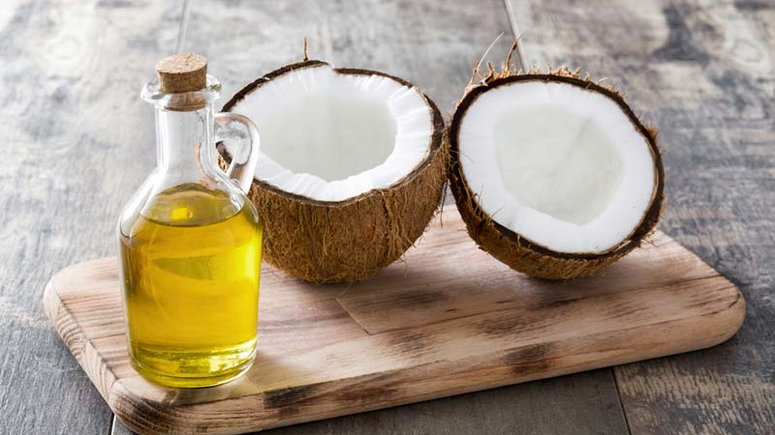
Based on new interest in healthy fats, I have been asked my opinion on coconut oils more than anything else in the recent past. Most of the confusion arises based on its high level of saturation as a fat. When I was a dietetic student in the late 1990’s, the one of the facts that stayed with me is that coconut oil is one the most naturally saturated in fat sources that exists (as high as 90% actually). Therefore, how is it possibly a good fat? With more popularity on higher fat diets, research shows evidence why it is now considered a readily available source of GOOD fat. So investigating how a saturated fat goes from zero to hero, here are some conclusions:
Coconut oil is liquid at 78˚ F and human core body temperature is 98˚ F. Therefore coconut oil cannot be solid in our body. Furthermore, liquid oils are digested fairly quickly and easily. Once fat, such as coconut oil is absorbed into the bloodstream, it is broken down and converted into energy.
More technically, why coconut oil is misunderstood, is its distinguishing feature of a shorter fatty acid chain compared to other forms of saturated fats and triglycerides. Coconut oil is what we call a medium chain triglyceride (MCT). This means 6 to 12 carbon lengths long whereas most saturated fats have long fatty acid chains of greater than 12 carbon bonds. The smaller chain length makes coconut oil easier for the body to absorb, digest and process as its breakdown requires less energy and less enzymatic action that is needed for longer chain triglycerides.
Another distinguishing difference is that medium chain fatty acids once broken down enzymatically and are absorbed they are delivered straight o the liver whereas most other fats, are digested through a separate metabolic pathway, involving fat cells. From the liver, the MCT are used as a primary source of energy eliminating the storage of them as a fat in cells. The result is a metabolic rate rise as well as an overall improvement in cholesterol profiles. There is further proof in the pudding when Eastern cultures, those that use a significant amount of coconut oil in their diet, have very low rates of heart disease.
Health Qualities of Coconut Oil
Since coconut oil is a fat, a small amount is naturally more satisfying, and with its recently discovered health benefits to boot, this offers a step towards weight management goals. It has been researched positively in weight studies to show a reduction in belly fat.
Coconut oil is also been shown to have antioxidant qualities. In other words, a protective effect against cancer.
Some studies have even shown possibility that coconut oil has potential for reproductive benefits. Rats fed coconut oil increased levels of testosterone, particularly testicular antioxidants. Furthermore, components of coconut oil help block testosterone from metabolizing to dihydrotestosterone which in effect debilitate good testosterone.
Supplementation of coconut oil in mice showed an improvement in bone health. Bone micro-architecture, bone density and volume of bone cells were improved compared to the control group. This study thus enlights the possibility of the oil reducing the risk of osteoporosis.
One of the most interesting studies I found, had more to do with brain function and thus potential for slowing progression of Alzheimer’s. The metabolic pathway simply put, reduces insulin resistance. This is key because of a glucose transporter dysfunction typical to Alzheimer’s patients. Ketone bodies, the by-products of fatty acid metabolism, acts as the brain’s alternative fuel source. Coconut oil and MCT in general are rich in ketones because of there physiological make up. With a lower insulin response, the brain’s ability to use glucose (the brain’s preferred form of fuel) with ketone rich food, is enhanced.
MCT in general are known for enhanced immunity functionality, particularly towards oral and skin pathogens. Moreover, part of coconut oil’s structure, lauric acid, has powerful antimicrobial /antifungal abilities. Thus the oil has a positive impact on the fight against candida and albicans.
Skin moisturizer, hair smoother, cuticle care, bath additive, make-up remover, scalp health, sunburn soother, eczema ease-up and massage oil. I am sure there are many more and personal experience, stories and feedback are welcome.
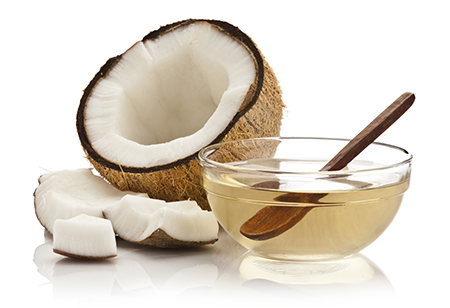
In Summary, after distinguishing medium chain triglycerides from other saturated fat. coconut oil, with its excess of physiological benefits, turns out to be a good fat over all.